I’m excited to share my newest book, now available on Lulu.com and soon to be found at a variety of sources, including Amazon and Barnes & Noble!
This book is rated for a 5th-grade reading level, so if you’re an adult trying to read it, you might want to double-check your glasses or grab a juice box!
It’s gotten a thumbs up from an elementary school psychologist and author, plus a retired fifth-grade teacher—pretty cool, right?
This collection of short tales from the China-Burma-India Theater of World War II and Johnston Island is my embroidery on stories that my uncle Hollis Estill—”Shorty”—regaled me with when he was home on leave in the late 40s and 50s. Most of the accounts are from the CBI during World War II. The last of the stories covers Shorty’s tour in the Pacific on Johnston Island/Atoll. Johnston Island/Atoll was at the center of the U.S. nuclear testing program in the Pacific.
Shorty joined the Army Air Corps a few years out of high school and was stationed in India during World War II. Following the war, Shorty reenlisted and served for 12 years in what became the U.S. Air Force. During those twelve years, he spent time in the U.S., at Johnston Atoll, and the Philippines.
My recollections of the tales are imperfect—60+ years does that—but the cores of the stories are locked into my memory. These tales represent my best recollection of Shorty’s yarns, with my embellishments to make them more readable. I, of course, have no way to verify whether any of these tales represent actual occurrences or are simply yarns spun to amuse a curious nephew.
I hope the stories are enjoyable and that the reader comes away with a credible sense of the adventures of a nineteen-year-old American kid in a challenging and changing world at a time of social and political peril.
Reverse Lend-Lease: Keeping the Freezer Stocked
Six feet six inches tall, in his stocking feet, lanky, slightly lantern-jawed—of course, he was called Shorty by his Army Air Corps buddies. Shorty was part of the 10th Air Force Combat Cargo unit, stationed at Chabua Airfield, built on an old tea plantation in Assam, India. Among the things that the 10th managed were vehicles for the British Army. The vehicles were nominally part of the China-Britain Lend-Lease program. Shorty and his friends did not have access to U.S. trucks, but they were housed near the storage area for the U.S.-supplied British lorries.
One of the unit’s cooks was a highly trained chef who had worked in New York and parts of Europe before joining the Army Air Corps. The chef–Butch–had a special knack for preparing game–venison, fowl, wild pig–and his specialities were in high demand both in the officers’ and enlisted men’s mess. Chef Butch’s problem was acquiring the game and keeping a stock in the unit’s freezers.
Enter Shorty, George, Manny, and Hazel. Shorty’s official role at Chabua was teletype and occasional radio operator. George was assigned to vehicle maintenance and had access to the British vehicles. Manny was a reformed car thief from New York City and a crack shot with the old Springfield rifles assigned to the unit. He had earned a marksmanship competition badge in boot camp. Shorty’s dad was a butcher, so Shorty was in charge of field dressing and cleaning their hauls. Hazel was a WAC nurse attached to the unit’s hospital and a trophy-winning clay pigeon shooter in Kentucky. Hazel had a special arrangement with a British officer to use his double-barreled 12-gauge shotgun and hand-loaded shells. Following occasional nocturnal visits to the officer’s small cottage, the shotgun would appear outside his front garden gate, with several number-6 brass shot shells and an empty game bag. A day or two later, the shotgun would reappear with empty brass shells and the game bag full of partridge, waterfowl, or peafowl.
At about the same time as the shotgun appeared by the gate, a 6×6 troop transport truck filled with fuel would disappear from the storage yard, and a couple of Springfield rifles, along with a handful of ammunition, would vanish from the unit’s armory. When the shotgun reappeared at the British officer’s gate, the truck would reappear in the storage area—usually with a nearly empty gas tank—and the Springfields, but no ammunition, would reappear in the armory.
Fresh venison, wild hog, and usually duck, peafowl, or partridge would appear in the unit’s freezer. Chef Butch would smile, the officer’s mess would be happy, and the enlisted men’s mess would have real food. The British officer would be ruddy-cheeked, smiling, and willing to share his gin. The officer in charge of the vehicle storage area would scratch his head and stop by his British friend’s cottage for a gin and tonic. The quarter-master in charge of the armory would recount the rifles, grumble about ammunition shortages, shake his head, chew some of the premium betel nut that had turned up on his desk, and enjoy venison roast with a good wine in the officer’s mess.
***
One drizzly night during the monsoon, Chef Butch entered Manny, George, and Shorty’s barracks, sat on the edge of Shorty’s bunk, and handed George a list of supplies. He explained that they were desperately needed for the celebration of the Commander’s birthday in two weeks.
“He doesn’t want much,” said Manny, looking over Butch’s shoulder at the list.
“Just a swamp deer haunch and roast rump of tree elephant.”
This comment elicited a big laugh from the entire group.
“When do you need this?” asked Shorty. “Manny will have to arrange the rifles, and Hazel will need to arrange the shotgun. The shotgun may be a problem ’cause I think she’s on leave next week.”
“We can get by without gamebirds. I still have a brace of partridge from the last trip. But the barasingha, the swamp deer, is a must-have,” said Butch. “I need the venison by next Thursday, at the latest. It has to hang for a few days before I prepare it. As for the tree elephant, you’ll have to talk to Al Capp …”
Everyone chuckled.
“Ok,” replied George, “We’ll see what we can do.”
Chef Butch handed George the list, got up, and left. The three men gathered around George’s bunk and plotted their next reverse lend-lease caper.
***
The 6×6 truck eased quietly out of the lot, its slitted headlights casting a faint light into the heavy, wet air of the early morning. Shorty jumped into the back end. Manny handed him two rifles and ran to the cab’s passenger side. Hazel slid over to the center of the seat, and Manny closed the door as he slid in.
“Where to?” asked George, putting the truck into low gear and slowly heading out of the base.
“I heard two of the hospital aids talking about seeing a big herd of barasingha in the swampy area over toward the river,” replied Hazel. “Let’s give that a shot.”
“You got it,” replied George, and turned onto the road to the river.
***
As the sun rose, the three men and the woman sat in the reeds along a shallow, slow-flowing stream, watching the nearby forest edge. Shorty nudged George and pointed silently at a large mango tree in a small meadow just outside the forest. The tree was heavy with fruit, and something was quietly eating the ripe mangos that had fallen to the ground. George nodded and nudged Manny. Manny edged into a better position with an unobstructed view of the tree and raised the Springfield to his shoulder. A large barasingha buck slowly and warily moved into the open meadow, chewing mangos. A shot rang out; the buck jumped, fell, got up, and ran into the forest.
“Shit,” swore Manny, “I had him clear and perfect, then he stepped just as I squeezed the trigger. I think I gut-shot him. Now we have to find him. Damn!”
When the group reached the mango, blood was all over the ground where the swamp deer had fallen and gotten back up. The blood trail led into the forest. The group, led by Manny with George at the rear with the other rifle, walked into the forest. A clear trail of blood and broken branches showed where the deer had lurched through the undergrowth. As the group approached a large tree, they heard a low growl.
Manny stopped dead and raised his rifle. A large, defensive tiger stood over the now-dead barasingha, teeth bared and coat bristling. The quartet started backing slowly away from the deer and the tiger. Manny kept his rifle at the ready. The tiger stood over the deer carcass, tail thrashing and growling, but did not move toward the people. The quartet backed out of the forest into the meadow without saying a word. Back in the meadow, they all breathed a sigh of relief. Manny looked at the others and shook his head.
“Sorry, folks. I thought we had our swamp deer clean and simple. The barasingha herd is scattered to God knows where, and the sun has gotten too high. We’ll have to try again tomorrow. George, can we stash the truck? I can disappear the rifles. Hazel, will you be available?”
“Hey Manny,” offered Shorty, “Look at it this way. That poor tiger now has two or three days’ worth of lunches and suppers, and he didn’t have to do anything but scare off some people. You did him a big favor, you know.”
“Shorty, I don’t know about you sometimes,” said Hazel between chortles. “Manny, sorry, but I head out to Delhi on leave tomorrow. I’ll get the scattergun back to his Sirness this evening.”
George leaned against the mango tree, leaned his rifle against the trunk, took out a Bull Durham pouch, and rolled a smoke. “Yeah, I think I can make the truck disappear for another day. The motor pool officer is on leave, and his sergeant likes to nap after an IPA for lunch, and I gave him a half-case.”
Shorty looked at his watch. “Hey, folks, we’d best be getting back. I’ve got duty on the Colonel’s secure teletype. Wouldn’t pay to mess that up.”
As always, when on a hunt, the four spread out in a line across the meadow, with Hazel in the center, walking back toward the truck. As they approached the stream, two ducks jumped off the water and into the air.
Boom, boom.
“Well,” Hazel said, “His Sirness and Butch will have duck.”
After collecting the ducks, Shorty walked back to the group, and they started across the small stream. As they exited the reeds on the other side, a small hog darted out of the reeds and ran toward the road. George raised his rifle, aimed, and fired. The pig folded into a bundle and stopped.
“A pig and two ducks, hmm,” remarked Shorty. “Hope cleaning them doesn’t make me late for work.”
***
The Colonel’s birthday party was a huge success. All of the officers raved about the venison roast and the partridge pie. Chef Butch was sure he would get a promotion. Three-fourths of the barasingha still hung in the freezer. The enlisted men’s mess was in for a treat: roast duck, pork ribs, and venison roast. A new trophy swamp deer rack adorned the wall of the British Officers’ Club. His Sirness hosted a duck dinner at his cabin; the quartermaster’s teeth got redder as he chewed his premium betel. The British motor pool officer found a half-case of Guinness on his desk, and his sergeant still had enough IPA for several naps. Neither of them noticed the new tarp on one of the 6x6s.
A Walk Out of Burma
The men looked at the body of the skinned monkey in Red’s hands.
“Red, I can’t eat that. It looks like my little brother when he was born,” Sam said, averting his head.
“Me neither, Red. I’m not hungry enough to eat a relative,” agreed Shorty.
“Well, shit, you guys, I risked our being found by the Japs to shoot this monkey, and now we are just going to throw it away,” Red responded.
“Red, I’m afraid that, hungry for meat as I am, the guys are right,” Richard, the pilot, said.
Bill, the co-pilot, and Charlie, the injured navigator, both gave a thumbs up.
“Well, eff you all then,” Red sputtered, “we’d best be finding some grasshoppers.”
***
Shorty was six feet, six inches tall. Gangly and a little clumsy, like a young dog that hadn’t quite grown into its feet yet. Of course, they called him Shorty. Shorty was a teletype operator; Red, Sam, Bill, Richard, and Charlie were all part of the U.S. Army Air Corps Air Transport Command. Many of them, including Shorty, had been in India since early 1942.
According to their official papers, the Army Air Corps Transport Command in India supported the U.S. lend-lease program to Britain and China. The Japanese invaded Burma in 1941. Britain was at war with Japan to defend their interests in India. The U.S. was providing the British and Chinese with equipment to support their battles with Japan. The U.S. entered the war in December 1941 and was engaged with the Japanese in the Pacific and, with the Allies, Germany in Europe and Africa.
The Air Corps guys were supposed to keep the paperwork straight and see that the Brits and Chinese got what was intended for them. That meant the supplies – the gasoline, munitions, and equipment going over the Hump to China to support the Chinese in their battle against Japan.
The Himalayas, the Hump, stood between Chabua Airfield in Assam, India, and Kunming on the Yunnan Plateau in China. The routes over the Hump by which the U.S. provided materiel to China were fraught with danger: bad weather, extremely high mountain peaks, and Japanese fighters flying out of Myitkyina, Burma. The route to China crossed northern Burma with its dense forests, rugged mountains, and Japanese troops. Many C-46 cargo planes did not complete the trip. Some were lost on the way to China; others on the return trip.
Shorty’s adventure began as a lark. He and several of his buddies had been drinking beer, chewing betel in the enlisted men’s mess and recreation area, and talking about the glories of various exotic women. They had heard that the Chinese women in Yunnan were very fond of Yankee G.I.s. Shorty and two other guys, Red and Sam, took a dare to hop a transport over the Hump and bring back a report on the ladies of Yunnan.
The three men, Shorty, Sam Williams, and Red Farley, hopped a cargo flight over the Hump. As their flight ticket, they volunteered to help unload the plane in China. As a rule, the aircraft stayed in Kunming overnight and flew back empty the following day. Along with the three adventurers were the three flight crew members: Captain Richard Hoffnagle, the pilot; Lieutenant Bill McGuire, the co-pilot; and Lieutenant Charlie Sampson, the navigator/radio operator. As was usual, the C-46 transport with the six men aboard was at the maximum load capacity of fuel, food, and munitions.
The Chabua takeoff was routine; the heavily loaded plane used the entire runway to get airborne. The flight over the Hump to China was uneventful. It was midsummer, and the monsoons hadn’t started yet. They had clear weather, and there were no Japanese Zeros up from Myitkyina as they passed over Sumprabum, Burma. It was, as always, cold going over the 16,000-foot peaks of the Himalayas in an unheated aircraft. Shorty, Sam, and Red groused among themselves back in the cargo area. Still, with their flight jackets, they didn’t suffer excessively. The airfield at Kunming was at an elevation greater than 6,000 feet, and they needed the entire runway to come to a stop. What the adventurers didn’t know was that for this flight, there was only a sixty-minute layover at Kunming.
As soon as they had emptied the transport and the flight crew had checked out at the operations office, they were airborne again, so much for their plan to experience the women of Yunnan. The three G.I.s groused and grumbled about the situation, but their only option was to stay at Kunming until a flight back across the Hump needed crew. No one knew when that might be, and the three men were due back at their posts in Chabua in about thirty-six hours.
The pilot, Richard, kept the plane as high as possible as they crossed the Burmese jungles below. Without warning, the three men in the cargo area got tossed to the side of the aircraft. Richard banked sharply and nosed down on an avoidance maneuver.
“Get your chutes on. The Zeros have spotted us,” shouted Charlie, leaning back in his seat just behind the cockpit.
The three men scrambled to grab their emergency parachutes and get them on as the aircraft continued to bank, dive, and climb.
“Get down on the floor – stay away from the midsection,” Charlie shouted.
As he spoke, bullets ripped through the side of the plane. One round clipped Charlie on the shoulder, and a round barely missed Red, coming in over his head as he dropped to the floor.
“We’ve lost an engine. Rick will try to get as much mileage toward home as possible with a glide. Be ready to bail when I give you the order,” shouted Bill Maguire, the co-pilot, as he emerged from the cabin,
Another volley of bullets tore through the side of the aircraft from the other side.
Richard came out of the cabin, “I’ve set the autopilot for level flight. Charlie, get the door open. Guys, it’s time to go. We’ll see you on the ground.”
Shorty jumped out of the side door; the wind grabbed and buffeted him. As he tumbled, he remembered the instructions for bailing–count to ten, then pull the handle–hard. As he dropped, he saw the plane above him, its engine flaming.
“Oh shit—ten,” and Shorty pulled the handle.
The nylon unfurled above him. Swoosh, ruffle, pa-whop; his fall ended with a jerk as the parachute opened and filled. He looked around. He could see two other chutes not far from him. No Zeros, no bullets. Shorty breathed a sigh of relief, then looked down and saw the tops of the trees speeding toward him. Aw crap, now what – steer for that opening in the trees. How do you steer a parachute? You pull the straps. Shorty pulled and watched the clearing rush up. Narrowly missing a large tree, Shorty hit the ground and rolled.
Conscious and alive but bruised, Shorty untangled himself from the parachute cords and stood up. Rough landing, but he was on the ground. His chute was crumpled on the ground behind him. Let’s see – yeah – gather the nylon. Don’t want the Japs to find it, and I may need it for shelter – yeah, that’s what they told us in training. Shorty, limping slightly, began pulling the chute’s cords toward himself and then rolled the nylon chute as best he could. Got to get out of this harness. Crap, what do I do with the harness? Disconnect it and chuck it into a hollow tree or somewhere it won’t be seen. Yeah. God, did the other guys make it?
Shouting from his left.
English.Must be one of the guys.
***
The six men huddled together under a giant forest tree. Shorty had a limp from a twisted ankle. Sam was shaken but unhurt. Red had multiple lacerations from the tree he had climbed down from, but was not broken or seriously hurt. Rick was uninjured. Bill had a twisted shoulder, but it was not broken. Charlie had a bullet wound in his shoulder. Rick had managed to grab the first-aid box before he jumped and was tending to Charlie’s wound. Charlie had jumped with the emergency radio, despite his wound, so they had the potential to communicate with Chabua if the radio worked.
***
Charlie’s shoulder was inflamed, and he was burning up with fever, but he was trying to get the radio to work–one more time. Shorty was looking at his red and peeling feet. Red had gone off to find something to eat. Bill was trying to build a lean-to out of vines and branches with help from Sam. Rick, using some leaves that their Kachin guide had given him, was cleaning Charlie’s shoulder.
Rick looked over at Shorty and said, “Shorty, that looks pretty bad. Didn’t Khin offer you something for that jungle rot?”
“Yeah, but it made my feet hurt worse than the rot. And, since he took off to recon the Japs, I haven’t seen any more of that plant.”
Khin, a Kachin man, was guiding them back toward Chabua. Like most of the indigenous hill and forest folks in Burma, Khin was not a friend of the invading Japanese troops. The Japanese forces were not friendly with the people, torturing and enslaving them whenever they captured them. Khin had left three days ago.
“Follow the setting sun,” Khin said before leaving. “Keep the morning sun at your back. Stop and rest during midday when the sun is straight overhead”.
The Americans stumbled and thrashed west, following or leading the reddish orb of the rising or setting sun, and hoping for Khin’s return. They pushed on, trying not to get turned around in the dense forest growth when the sun was not visible. The threat of Japanese patrols was constant.
A gunshot, muffled by the trees, brush, and vines. The four men froze; Charlie shut the radio down and pushed it under a shrub. Red and Sam huddled inside their lean-to, and Rick and Shorty crouched on the ground. Silence. Then, a thrashing in the forest to their left. Rick pulled out his pistol. Out from between the shrubs and trees, a familiar shock of red hair. Sighs of relief as Red walked into the tiny clearing with a dead monkey over his shoulder.
Despite their hunger, the men could not eat the monkey. The carcass and skin were buried in the forest floor duff. Shorty, Red, and Sam found some fruit, a few giant grasshoppers, and a couple of lizards. Not the Waldorf Blue Plate Special, but sustenance. Another sleepless, wet, uncomfortable night. The men staggered on toward the west. Khin finally returned and guided them away from areas of heavy Japanese patrolling. Slogging through streams with leeches, chewed by biting insects, ever fearful of snakes, trembling at the occasional leopard or tiger roar, always hungry, always wet and tired, always avoiding Japanese patrols.
***
Crossing the Chidwin River at night, up to their armpits in the sluggish, muddy flow. They were finally out of Burma and into India. A British Army patrol picked them up. They had managed to return to Chabua, where they were all put into the base hospital. With fungicide and penicillin, Shorty’s feet cleared up, but they remained scared by the jungle rot. Charlie nearly lost his arm, but the doctors at the British hospital in Delhi saved it. Charlie got mustered home. Bill’s shoulder was repaired, and he was soon back at co-piloting. Shorty, Red, and Sam received mild reprimands for being AWOL and were assigned back to their jobs. Rick was soon scheduled for another flight over the Hump. A few months later, he was lost on a flight to Kunming.
Fountains, Clear Water, and White Stone: R and R at The Maharajah’s Summer Palace
R&R – Rest & Relaxation – what every war-weary G.I. looked forward to. When their turn came, Shorty and his unit were sent to an unnamed Maharajah’s Summer Palace in the Punjab. They never did know the actual name of the place or exactly where in Punjab they were sent. There was great concern that if the Japanese got wind of where soldiers were being sent on R&R, they might decide to bomb those places. Japanese-controlled airfields in Burma were not far, bomber-wise, from a large part of northern India.
The palace was in the lower foothills of the Himalayas, in a small valley near a river. The beautiful scenery and moderate weather had made it a perfect summer hide-out for several Maharajahs over the centuries. The palace was built from white limestone, nearly Italian marble, quarried locally. It was surrounded by a wall that enclosed luxuriant gardens filled with white limestone reflecting pools. The gardens contained shady nooks, benches, and limestone-paved paths. Balconies around the exterior of the main building overlooked many shallow ponds, some of which contained water lilies. Others were clear, clean pools of water with a small fountain in the center. Sitting on the balconies, listening to the burble of the fountains, was relaxing—so relaxing that many of the G.I.s would haul their cots out onto the terraces to sleep at night. Of course, they included their mosquito nets.
Altogether, it was a great place for weary G.I.s to rest and relax. It was a great place for R&R, except that many of the people the Army Air Corps sent to the palace were 19- and 20-year-old kids with a need for mischief and mayhem. One of the people in the group Shorty was with was in the Bomber Squadron at Chabua. His job was assembling and loading the bombs that were dropped on Japanese positions in China and Burma. He had somehow smuggled a bunch of contact, incendiary bomblets into the palace. The bomblets were small and contained an explosive charge and a substantial amount of white phosphorus. When the bomblets struck a hard surface, they would detonate and burn. White phosphorus burns in water or air – in fact, phosphorus burns especially vigorously when put in water and burns through limestone.
The palace grounds crew was entirely composed of local Punjabi men and women. The women took care of the interior of the buildings, and the men maintained the exterior and the grounds. The palace had a Sikh unit from the local police force that provided security. The G.I.s were under the command of a young, newly minted Captain, Fred Sawyer, who had the hots for one of the local maidens assigned to the palace kitchen. The besotted young Captain was responsible for twenty young men, one of whom had incendiary bomblets. Those young men, some bent on mischief, were housed in a limestone palace with balconies overlooking pools of water. It was a recipe for mayhem and trouble.
***
When the bomblets were tossed off the balconies and into the reflecting pools, they burned bright white, made the water bubble and fizz, like aspirin in Coke or baking soda in vinegar, and burned holes in the pool bottoms. The palace maintenance staff were kept busy repairing the pools, often requiring the replacement of part of the bottom. To say the Punjabi staff, and hence the Sikh police officers, were unhappy would be the understatement of the century. Where was the young Captain while all of this was transpiring nearly daily? Under the haystack, fast asleep? That he should be so lucky. He was busy in the kitchen, gaining weight and drooling over a young Sikh woman. He even learned how to wrap his own turban.
***
Of course, headquarters in Delhi heard about the fizzing pools. A delegation headed by a cranky Colonel, Ferdinand Smith, who wanted to get reassigned to stateside duty in D.C., was dispatched to the palace. The Colonel and his staff were met by the local police commander, Colonel Harbir Bajwa Singh. Captain Sawyer, dragged from the kitchen by his aide-de-camp, was pulling his turban off and dusting crumbs of food from his uniform jacket as he walked. The G.I.s on R&R were drawn up in formation near the front entrance to the palace. Colonel Singh was sure he heard a low sniggering as he walked along the line of airmen. A young man from the maintenance staff came hurrying around the side of the palace and nearly tripped as he stopped in front of Colonel Singh.
In Hindi, “Colonel Singh, sir – there is another bomblet in the pool under the Colonel’s own balcony. It was just thrown there a few moments ago.”
“Colonel Smith, please come with me right now,” Colonel Singh requested, turning to face the American Colonel. “My staff just reported a bomblet in one of the pools.”
Colonel Smith grumbled to himself but followed Colonel Singh and the maintenance man around the side of the palace. A large reflecting pool was fizzing and emitting sparks of burning phosphorus. Several men from the staff stood nearby and watched. The two colonels stopped a distance from the pool and looked at the bright light and boiling water. Captain Sawyer, his face showing substantial dread for the consequences of the visit, stood just behind them.
Colonel Smith turned on his heel and stared hard at the captain. “Captain, where can we sit and discuss this situation? Colonel Singh, please join us – I believe the good Captain will have some explaining to do. Captain, lead the way.”
Captain Sawyer took a deep breath, tried not to sound as petrified as he was, and replied, “Yes, Sir. Colonel Smith, Colonel Singh – please follow me.”
He turned sharply and marched back to the entrance to the palace, with the entourage of Colonels and staff following. The young Captain led the officers and their aides into a large, sumptuous room with a conference table at the center. Captain Sawyer directed the Colonels to the two chairs at the head of the table and waited until they and their staff were seated before sitting at the far end of the table.
There are no written records of that meeting. The captain, now a First Lieutenant, was reassigned to a minor post in Delhi. Colonel Smith was reassigned to an office in D.C., and Colonel Singh received a decoration for meritorious action from the leadership of the Punjab police forces. No one ever discovered where the bomblets had originated or how they had gotten into the palace. The R&R group, according to the official schedule, returned to their duty stations a few days after the meeting. There were no future problems with incendiary bomblets at the palace, and the maintenance crews went quietly about their work as groups of G.I.s and British soldiers enjoyed their R&R.
Bombing Rangoon
The U.S. had been at war with Japan for what seemed to Shorty and his fellow airmen forever. The U.S. was still delivering supplies over the Hump to China with C-47s and losing too many of them to bad weather and Japanese fighters. Merril’s Marauders were apparently making headway in helping to open the Ledo Road in northern Burma, but it was slow going. The Japanese continued to bomb U.S. and British outposts along the India-Burma border with some impunity. There was talk in high places of bombing Rangoon, the Japanese capital of Burma, but the discussions never seemed to result in any action. Nothing, it seems, worked better to frustrate young warriors than indecision, especially if the warriors were imbibing the contents of various brown bottles.
***
Among a group of young airmen on one particular night were a C-47 pilot and co-pilot, a bomb assembler and loader, and three other airmen, Lenny, Jake, and Shorty. All had been imbibing the elixir of barley malt and hops and chewing betel. Chewing a betel quid counteracted the drowsiness associated with alcohol consumption by promoting alertness. The assembled group represented six alert but drunk young men who desired to wreak havoc on the Japanese in Burma.
As the group drank, chewed, and argued, the bomb handler mentioned that they had loaded a C-47 with munitions to go over the Hump earlier that day.
“That plane is full to capacity with crates of grenades, 4.2-inch mortar rounds, 4.5-inch artillery rounds, and incendiary shells,” the bomb handler exclaimed, waving his arms. “It’s scheduled to fly tomorrow.”
The pilot looked up from staring into his beer mug and laughed. “Hey, I’m supposed to fly that crate. Maybe I should fly earlier than planned and go via Rangoon. Naw, shit, can’t do that; not enough fuel to get back here, let alone over the Hump with that load if I detour by Rangoon.”
“Jeez, yeah, the only way to get back would be to dump all that stuff somewhere along the way. You could get an empty plane back here,” the bomb handler said, taking a big swallow of his IPA.
The co-pilot said, “Yeah, but how would we get rid of the load? I mean, there’d only be the pilot and me.”
“Not to worry,” another guy interjected, “you’d have a crew ready to get the stuff out the door.”
“Hell, yes,” offered Shorty, “the Japs would love to get all that stuff, right?”
About an hour later, a 6×6 personnel carrier pulled onto the tarmac at the airfield and stopped next to a C-47 sitting on the line. Six young men climbed out of the truck and boarded the aircraft. The 6×6 trundled back off the tarmac and disappeared in the dark. One of the sentries playing pinochle in the guard shack thought he heard an aircraft engine turn over. The sound of a C-47 taxiing onto the runway brought the sentries to their feet and on the run onto the tarmac. A C-47, clearly heavily loaded, was starting down the runway. It wavered and wobbled slightly, then slowly lifted into the night sky. There were no running lights, only a shadow disappearing into the dark.
“Shit, Phillips, get back to the guard shack. Call the Commander. Someone just stole a loaded C-47.”
The drone of the aircraft faded into the southeast. The engines were purring; the fuel tanks were full. The plane was being a sweetheart. The pilot and co-pilot watched the altimeter and maintained a level flight at a modest altitude. Below, in the waning moonlight, they could see glimpses of a river. The co-pilot examined the charts on his lap. They were over Burma, and if they followed the Chindwin River, they would arrive over Rangoon. The pilot brought the plane to a lower altitude close to the treetops. The Japanese radar would have difficulty seeing them as they approached Rangoon. The pilot set the aircraft’s speed to minimize fuel use. In the cargo bay, the four men dozed among the munitions crates. In the forests and along the river below, a wave of silence followed the aircraft as the creatures of the night stopped what they were doing until the engine sound had passed. A few people heard the sound in the small villages along the river and looked up, but most were asleep. The small Japanese garrisons along the river were quiet; no one expected a C-47 to be flying there.
“Bill,” the pilot said to the co-pilot, “how close are we to Rangoon?”
“We should come over the outskirts in about thirty minutes. I’ll get the unloading crew moving.” He unbuckled and moved back into the cargo bay.
“OK, guys, it’s time. Get those crates and the cargo doors open.”
Shorty, the bomb handler, and the other two men began prying lids off crates. The bomb handler opened the cargo door. A moist but warm wind filled the bay. The men threw the crate lids out the cargo door. Below, the night creatures were startled in their hunts by slats of wood crashing into the trees and the river. The co-pilot returned to his seat and his charts.
“We should be seeing some home fires. We are over the outer edge of Rangoon. Let’s swing to the east and then come around over the city’s center. One or two passes over the city should be enough. Then we will need to boogey before the Japs can put their Zeros in the air.”
“Gotcha, Rangoon, here we come.”
The C-47, flying just above the treetops, circled over the city, and munitions tumbled down as the men pushed open crates out the cargo door. A trail of explosions and fires followed in their wake. Grenades were launched by hand out the door. Most exploded before they reached the ground, spreading a hail of shrapnel. As the C-47 reached the river again, they passed over the Japanese airfield, and one of their artillery rounds found its way into a munitions storage building. There was a hellish explosion as the munitions storage went up. Several mortar shells struck Japanese aircraft. The C-47 winged away, headed northwest. The Japanese radar couldn’t find the low-flying craft, and the launched Zeros could not locate it against the forest cover.
***
In Chabua, the group was welcomed by a squad of MPs and the base Commander. The six men were escorted to the base stockade. As the sun broke through the early morning mist, the six were brought before the base commander. The Commander was not a happy man. As the group’s ranking person, the pilot responded to the Commander’s questions. The pilot explained their escapade, noted that they had been intoxicated, and apologized for the fuel and munitions they had used. As he responded to the Commander, an aide came in and whispered to the Commander. The Commander looked surprised and stepped out of the office, leaving the six men and their MP guard standing at attention.
A few minutes later, the Commander returned, sat at his desk, looked over the six men, and told them to be at ease.
He leaned back in his chair, held his fingers to his chin, rocked forward, and spoke, “I should have the lot of you placed in the stockade for this bit of idiocy and discharged without honor. However, the reports that are coming in suggest that you may have done the American and British forces a great service tonight. Apparently, major portions of Rangoon are in flames, and its airfield suffered major damage from a munitions supply explosion. You could not have done a better job if you had used a bomber and had targets. I will be required to put a reprimand in your files for the unauthorized use of a C-47 and the misplacement of munitions needed by our Chinese allies. All in all, you are one lucky bunch of buggers. Now get back to your duty stations.”
The six men looked at one another, smiled, turned, and quickly exited the Commander’s office, followed by the MPs. Once outside, they hugged one another and danced around like wild men. The MPs joined them, as did a crowd of base personnel. A cheer arose as the four enlisted men returned to their barracks, and the pilot and co-pilot headed for the officers’ mess.
The Bombing of Rangoon never became news. In fact, it never became known outside that cadre of young men and their superiors. The bombing was kept quiet outside the military. The Japanese remained stunned. How did an American aircraft fly from Chabua to Rangoon and back without being detected or shot down? It is likely that heads rolled in Rangoon and perhaps even in Tokyo. Yep, that bombing never occurred, except that Lenny gave the WAF, Marge, who typed in the Commander’s office, a necklace made of grenade pins that hung to her midsection.
Saving a Lieutenant
The Army Air Corps in India was a serious combatant, not just a provider of advice and support to the British. U.S. bombers were hammering places in Burma as well as China. The major push in India was to open and maintain the Ledo Road in Burma as a supply line to China. An assault on the Japanese airbase at Myitkyina was in the works. Merril’s Marauders had been pulled out of Burma and replaced by a regular Army unit trained in jungle warfare.
Because of his expertise and skill as a teletype operator, Shorty had been assigned to a unit that was intercepting Japanese message traffic in preparation for the assault on Myitkyina. Their job was to intercept messages between the Japanese in Myitkyina and Rangoon and send them to Delhi. Shorty’s unit had been relocated from Chabua to a remote post in eastern India’s mountains on the border of Burma. The unit was located in a densely forested valley with only a narrow dirt road for access. The Japanese were aware of their activities and determined to stop them. The Japanese, however, did not know exactly where the unit was located. Using anti-personnel cluster bombs, the Japanese bombed, on a near-daily basis, whatever signs of military activity, such as the narrow road leading to the unit’s location, they could see. The bombing often came very close to the unit’s facility. The unit was well sheltered in bunkers and trench shelters, including an aid station. The dense forest cover blocked their overhead view and acted as a silencer for aircraft engine noise. As a result, the American troops were not aware of a raid before the Japanese bombs started landing.
The day had started very quietly. The usual forest sounds of birds, insects, and monkeys filled the moist air. There had been unusually light message traffic between Myitkyina and Rangoon. The small cadre of airmen was taking advantage of the quiet and relaxing. Shorty was walking between his duty station and the mess tent when the air raid sirens went off. Right behind the siren came the bombs. The cluster bombs would make a loud bang just above the treetops, followed by a rain of anti-personnel bomblets. Pandemonium reigned as the bombs fell, and people ran for the bomb shelters.
Shorty was running toward the nearest shelter when a jeep careened into the camp and was hit by a bomblet. The driver was blown from the jeep, a mangled, dead mess. The jeep flipped onto its side, trapping a young Lieutenant riding in the jeep, who was hit but not killed. The Lieutenant struggled to escape the burning jeep but could not get out of the wreckage.
Bomblets rained down on the narrow road and surrounding forest. Shorty turned around, ran to the jeep, and struggled with bent metal and flames. He succeeded in righting it onto its wheels. Shorty pulled the young officer out of the jeep and ran toward the aid station with the injured man over his shoulder in a fireman’s carry. Another bomblet hit nearby. The force of the explosion and the shrapnel all but cut Shorty’s legs from under him. Shorty was tall, six feet six inches in his stocking feet, hence the nickname Shorty. His height saved his life and that of the officer he was carrying. A shorter person would have taken the shrapnel near mid-body and been killed. The officer would have been shredded.
Shorty stumbled from the force of the blast but managed to keep running. Shorty’s resolve would get the injured man to the aid station, or he would die trying. Bomblets continued to fall, and Shorty narrowly missed getting hit by another of them. Two medics rushed out as he approached the aid station and helped Shorty and the wounded officer into the shelter. Shorty needed aid as much as the man he had rescued; his legs were cut to ribbons by shrapnel from the bomblets.
The medics at the station got the Lieutenant onto an operating table, stopped his bleeding, and closed his wounds. Shorty found himself on an adjacent table, getting his bleeding staunched, shrapnel removed, and his legs bandaged. The medics could not extract all of the embedded pieces of brass from Shorty’s legs, but got enough to stop the bleeding and let him walk again. Shorty and the Lieutenant were transported out of the facility as soon as it was clear.
A hospital in Delhi was their eventual destination. Shorty and the young officer were lucky in the extreme. Not only did his height save Shorty’s and the officer’s lives, but none of the shrapnel found its way into any veins or arteries. Had that happened, he probably would have died with the Lieutenant over his shoulder. After several months of recovery in Delhi, and when he could walk on his own, Shorty got his ticket home. The young officer also got his ticket home. That lucky Lieutenant never knew who had rescued him from the wrecked jeep. Likewise, Shorty never knew who the young man he saved was or what became of him.
Back in the States, Army Air Corps doctors worked at cleaning up Shorty’s legs. The effort required several years of periodic hospital visits to pluck more emerging metal from his legs. The discoloration and scars from the brass shrapnel never entirely disappeared. The shrapnel scars and chronic foot problems caused by jungle rot from his walk out of Burma were lifelong reminders of those days, months, and years in India.
Gooney Birds and a Chris Craft Cruiser
Johnston Island is an atoll in the South Pacific Ocean. During WWII, the atoll served as a Naval Airstation, providing refueling for medium and heavy bombers. The atoll was nearly one hundred per cent runway and associated structures. Before the Navy in 1934 and the Air Force in 1948, the atoll had been a bird refuge by Presidential decree, beginning in 1926.
The atoll was the nesting and resting grounds for various seabirds, including the Laysan albatross. The albatross became known as “gooney birds” to airmen and their naval predecessors. The extended runway installation provided a near-perfect place for the gooney birds to land and take off. Of course, the Air Force would have preferred not to have the birds, since they posed a hazard to military aircraft landing and taking off at the airfield. However, the atoll remained a wildlife refuge even while under military control. The birds had history and three presidential declarations; they outranked even the military commanders.
***
Hazel, Shorty’s bird-hunter friend from India, had volunteered when she first got to the island to shoot the birds off the runway. Although the base commander would have liked to accept Hazel’s offer, he was bound by Federal regulations against shooting any of the resident seabirds. Because they could not shoot them, the answer to gooneys on the runway was a program of hazing them when a plane was coming in or taking off. The enlisted men, including Shorty and Hazel, were rotated onto hazing duty regularly. Hazing was largely successful, and the personnel found it relaxing and humorous. Hazel and Shorty would sit, smoking a cigarette while waiting for planes to use the runway and watching the birds come and go. After a while, Hazel decided that the birds were much more fun alive than dead. No planes crashed on take-off or landing. The same can’t be said for an albatross trying to land.
Albatross are graceful, soaring birds that spend days and sometimes years at sea. Albatross are not graceful birds on land or when they land. The birds would soar in over the runway. Like any self-respecting aircraft, they would extend their landing gear. That is where the likeness to an aircraft would end. They would land on their feet, attempting to run as they touched down. With a very high frequency, they would stumble and tumble into an awkward ball of feathers. Following their landing, such as it was, the birds would get up, shake themselves, and waddle off the runway. Hence, the name ‘gooney bird’ was applied by the military personnel who witnessed the landings.
Take-offs were also somewhat ungainly. The birds would spread their six-foot wings and gallop, listing from side to side into the wind, along the runway, flapping their wings. When they reached the end of the runway, the wind would catch their great, made-for-soaring wings. With a final flap or two, the birds would regain their beauty and dignity and soar out over the water, rising on updrafts from the swells as they went. Watching the birds take off and soar over the water, Shorty and Hazel often discussed and wondered how they would take off if they landed on water.
***
What do young men and women stationed on an island in the mid-Pacific Ocean do in their spare time, besides watch gooney birds? Being young Americans with a ‘can-do’ approach to life, the staff at Johnston Atoll came up with a brilliant and logical solution. They pooled their money and purchased a 30-foot Chris Craft Express Cruiser. Chris Craft cruisers, at that time, were considered the classiest and best deep-sea fishing boats available, and they were expensive. The airmen could afford such a luxury item because, in the middle of the Pacific, there was nowhere to spend their money. Everything they needed was provided, including booze and cigarettes, so buying a big, expensive boat seemed the right thing to do. Along with the cruiser, named GOONEY BIRD, which they wrangled a way to ship in via air, they acquired a full assortment of marine fishing gear.
Whenever the boat was available, Shorty would go fishing. The cruiser was assigned using a signup sheet that ignored rank or rating. On some days, he and whoever else was on the boat that day would stay within the lagoon on the east side of the atoll. They would fish for whatever was biting that day, relax, and watch the birds and planes come and go. On other days, the intrepid fisherfolk would head to deep water and seek bigger prey. Swordfish and massive tuna made for exciting fishing and kept the base freezer full. Sharks were often caught both in the lagoon and at sea. Sharks made exciting sport on a fishing line, but the G.I.s generally released them—shark fin soup was not yet on the menu.
Shorty, Hazel, and some compatriots got caught in a white squall—a brief but fierce mid-ocean storm during one of their deep-sea trips. They had been out further than usual, and Shorty had hooked a whopping tuna. The fish was so big that it pulled the boat further out to sea before Shorty got it in. By the time Shorty had subdued his catch, the sky was darkening. A storm was headed their way. They cranked up the motor and headed back toward their base at full throttle, but the storm was faster than the cruiser.
The squall produced massive waves and punishing wind. The cruiser demonstrated why it was highly considered as a deep-sea fishing boat. The cruiser rose and fell on the giant waves but remained upright and intact—it rode out the storm. The crew spent the storm in the cabin with the hatches closed, trying to keep the boat headed into the waves. The storm blew on and the group returned to the island, late for duty and a little seasick, but safe. Shorty’s tuna also made it back. They had securely lashed it to the side of the boat before the storm hit because it was too long to bring on board. The mess hall served tuna steak—all you could eat— for a week.
***
When a new crew came to the island, they would ante up dollars for the boat. Effectively transferring ownership and responsibility from the unit that was leaving. It was, of course, all informal, and no paperwork changed hands. The Command structure on the island was included in the transfers, and the process was accepted as a regular part of operations.
***
Shorty viewed his tour at Johnston Island as an extended vacation after his time in India. Most of the veterans assigned there had the same attitude. It was a bit of a Pacific Island paradise getaway for the airmen assigned there. The work was never very strenuous. The gooney birds were always a source of wonder and humor. The fishing was always good. Shorty never talked about the nuclear testing. It is likely that during Shorty’s tour, no atomic tests were conducted, or he was sworn to not talk about what he saw and experienced. Being mum about what was happening in the Pacific in those days was how it was. Shorty had no idea what became of the Chris Craft in later years. It may still be there – who knows?
Fenton is a retired biologist whose writing includes eight mystery novels, three children’s and young readers’ books, a book of Haiga, and several published poems, and a short story in the Ruidoso campus of Eastern New Mexico’s annual Ridgeline Review. Fenton lives in Las Cruces, New Mexico.
When my Uncle Hollis returned from India at the end of WWII, he regaled me, a curious young kid, with numerous tales and remembrances from his years in India, much of it in the Punjab region. His stories included tales from the war, some of which I have rendered as short stories under “Tales from the CBI”. Others were simply descriptions or remembrances of things he had experienced. Some of those remembrances are not suitable for repeating here, but others are.
He talked about chewing betel and getting red-stained teeth, and he raved on about mangos. According to Hollis, they were the fruit of the gods. Nothing was as good. As a kid, that stuck with me, at least partly because at that time the stores that my grandmother and mother shopped at didn’t yet have mangos. There was no opportunity to taste the fruit in the small chunk of the world that I occupied. Today, of course, all supermarkets and corner groceries (where they exist) stock mangos, often two or three varieties. Unfortunately, they are seldom ripe.
I didn’t taste a mango until I was an undergraduate in biology. In the summer of 1965, a group of us traveled into Mexico on a biological survey of the Volcan de Nieve, in the Nevado de Colima in the Mexican state of Jalisco. The five were me, two other biology students, our professor, and a Ph.D. candidate in biology from the University of Arizona. The guy from Arizona was our guide, spoke Spanish, and was familiar with the place we were going. We drove from Las Vegas, Nevada, via Tucson, Arizona, down the west coast of Mexico to the mountains. Along the way, we stopped at an open-air market in Guadalajara to buy some fresh fruit and veggies to supplement our canned beans and potatoes. The market had tables stacked with bananas, guavas, corn, and mangos. I bought a hand of ripe finger bananas and a fresh, ripe mango. I had also never seen or tasted little bitty ripe bananas.
The bananas were terrific, but the mango was to die for, as people would now say. The juicy, yellow-orange, sweet fruit exceeded all my expectations of flavor that had resulted from my uncle’s tales. The fruit of the gods, to be sure! The yellow and red-blushed skin needed to be peeled, which resulted in gooey hands. The flesh had a sweet, fruity odor with hints of citrus—orange or mandarin, and the juice fairly squirted and cascaded down my chin when I bit into it. The big oval-shaped, flat seed made eating the mango a bit difficult, but the slightly fibrous, aromatic, and sweet fruit was the payoff. I couldn’t wait to get back to Vegas and regale my uncle with my mango experience. Unfortunately, stores in Las Vegas still had not discovered the fruit of the gods. I was to go without another taste of ripe mango for years.
One day, in my fifties, I discovered mango lassi. Now, I have to say that I had, over the years, had plenty of mango from the stores, seldom as ripe and sweet as that first one. Lassi is made from yogurt and mango, blended into a smoothie, in current parlance, and comes from the Punjab of India. Although I don’t remember Hollis specifying lassi, I suspect that he had enjoyed something like it in India in the 40s.
My discovery was the result of trying a new Indian restaurant in Las Cruces, New Mexico. My wife and I went to the restaurant for supper not long after it opened. There, on the menu, was mango lassi. It was described as a blend of yogurt and mango. I had to try it. We ordered our supper, which, of course, included Naan, and the lassi for our beverage. I couldn’t believe my taste buds. The gods had reached down and touched those glasses. The restaurant folks knew how to make mango lassi, and they used fully ripened fruit—shelf-ripened to be sure, but ripe.
That place became one of our favorite supper establishments, and we drank mango lassi at every meal. Sadly, they went out of business. We have, however, found another small Indian restaurant that makes the beverage. It is delicious. We’ll be going back there.
Uncle Hollis is no longer with us. I only have my memories of his tales and stories, but I recall those stories about how wonderful those mangos in India were, and I relive, via mango lassis, my first taste of the fruit of the gods in Guadalajara.
“Sure, I sit here in this holder looking a little worn. The lettering on my side is chipped and sort of hard to read … but it’s there!
“That’s what’s important; that’s why I’m proud. I’m in the holder, and you can see my label – Look, right there, MILAGRO Coffee y Espresso. What, you can’t quite read all that – hey … look harder – it’s there!
“I’ve even got my original lid, and it still works.
“What do you mean what’ve I got to be proud of – I’m just a coffee cup – that’s where you’re wrong, my friend – I’m not just another coffee cup! I’m a Milagro coffee cup. Who’s Milagro? They are the coffee shop across the street from the university. Look, friend, they are a high-class coffee joint. They roast their own coffee. The intelligentsia of Las Cruces hang out there. That’s who Milagro is.
“Naw – I don’t remember being pressed out of a stainless-steel sheet or getting a handle – but, hey, do you remember being produced … I don’t think so. Molded plastic? What’s to remember? Ok, sorry, that was a mean shot.
“My first recollection is when the box was opened, and I was taken out and put in the display rack. There I was, along with fifty nearly identical stainless steel travel cups… all of us shiny and proud … our lettering all new and clear … and no idea what was coming.
“I had never tasted coffee at that point … didn’t even know what Coffee or Espresso was, but that didn’t matter; I was number 48 in a row of MILAGRO cups. I, no, we were destined for some great future; we just knew it.
“A person came in, looked at the rows of us, then pointed at me. My life had begun.
“I got put in the cup holder on the driver’s side – yes, I know – not everyone gets that place in a car – and it was mine alone. The car was a great little red Honda. Every morning, we drove into El Paso. I started every day filled to the brim with strong, black Milagro coffee. I ended every day empty and sitting on the counter in the kitchen. What more could a cup ask?
“The years have gone by. We don’t make the regular trip into El Paso anymore. My person is retired. We go out in the car for groceries or visiting folks – oh, yeah, it’s now a tangerine Toyota Prius – YES! I still get filled every morning and often during the day with hot black or sometimes iced coffee. That is a change. Back in the early days, I would sit empty or almost empty in the car all day until we got home at night. Sometimes, I would get filled again, but usually not.
“We still go out in the yard early in the morning in warm weather. We sit in the gazebo or on a bench under a mesquite and watch the birds. I especially like the hummingbirds. We have a lady hummer that defends her feeder with vigor. She drives off every other hummer that comes along – even the male and her young.
“Yeah, well, he has almost lost me on one or two occasions. Usually, he would forget me, and I would spend the night on the glass-topped table in the gazebo. He would come out and get me the next morning, rinse me out, and refill me with coffee – then the routine would start again.
“Those nights on the table were a little scary but always interesting. Once, a couple of coyotes jumped the wall and snooped around the yard. One of them came into the gazebo and sniffed me. I guess the smell of coffee — that I am now permeated with — disagreed with the coyote. It shook its head and sneezed all over me. A few minutes later, the coyotes jumped back over the fence when the dogs in the kennel realized they were there and set up a barking fuss.
“Then there was the time I fell out of the cup holder and slid under the car seat. He couldn’t think where he might have left me. That was a lonely time. He got another cup. Then he found me again. The new cup went into the cupboard, and the cupholder was mine.
“It’s been a good life for a traveling coffee cup. Yeah, my label is getting harder to read, and I’ve got a couple of dings in my side, but I still get filled to the brim with strong black coffee every morning. What more could a coffee cup ask?
“We went into Milagro Coffee y Espresso the other day. First time in a long time. When my person handed me to the barista, she remarked, ‘Hey, I’ve never seen a Milagro cup like this one. This must be the very last one around.’ So, there you have it, I’m the last Milagro cup.”
Overton—a small Mormon (Latter Day Saints) agricultural community along the Muddy River in extreme southeastern Nevada. Marshland, fields, irrigation ditches—totally rural, but close to Lake Mead. At the end of the road, at the lake, a small dock, a café, and a tackle shop catered to fishermen.
The Overton Arm of the lake, named for the town, was known for its largemouth bass fishery, and boats would come up the arm from launch points closer to Las Vegas and Boulder City. They often needed fuel, and the people on them would be hungry and looking for a potty. The Overton boat dock provided fuel, food, and restrooms. Overton, the town, offered limited tourist conveniences: a gas station, a small motel, and beer at the local grocery store. A small bar served beer and had a pool table in the back.
Overton was a great place for a boy to grow up. There was fishing in Lake Mead, swimming in the irrigation ditches, and duck hunting in the Muddy River marsh in the fall. Stanley Jones had grown up in Overton. The Jones family had a long history in the area. Stan’s grandparents had lived in St. Thomas and were relocated to Overton when the lake inundated the town. Stan was known as a Jack Mormon. He was from an LDS family and had been raised in the church. However, he had discovered the wonders of beer and whiskey somewhere in his journey, probably during his time in the Army. Stan was a regular in the tiny beer bar and always had a bottle of Jim Beam in his garage. Stan’s garage was the only gas station and auto repair shop in Overton.
Stan was addicted to waterfowl, duck and goose, hunting. When he wasn’t sitting around the wood stove in his garage swapping lies with his good old boy buddies, he was getting ready for waterfowl season. Whenever there was time between trucks, tractors, harvesters, and cars, he would be cleaning his shotguns, making or repairing decoys, or fixing his duck blind in the marsh. During the long, hot summers, when not cussing a broken engine, Stan would often sit in the shade at front of the gas station, and read magazines and books dedicated to ducks and geese, where they lived, what they did, and why they flew north in the spring and south in the winter. Even though Stan loved to hunt waterfowl, he often daydreamed of becoming a great goose and leading a vee. Stan would lean back in his chair, put his feet up on an old five-gallon Quaker Oil can, close his eyes, and drift into a semi-dream state where he was a Canada goose.
Stan was not bashful about his addiction and was more than happy to share his stories and knowledge with anyone who would listen. That applied especially to the young men and boys hanging out at his garage. He seldom, however, said anything to anyone about his goose dreams. Now, understand that Stan liked his beer and a shot of whiskey. His remedy for almost everything was a stiff shot of bourbon, especially winter morning chills or sitting in the duck blind in an autumn frost. Stan did not—ever—offer booze to the young boys and men that hung around. He and his old cronies were one thing; the young males of Overton were quite another. He was not a practicing Mormon, but he didn’t believe he should defy the rules.
Stanley Jones could be found outside his garage on any crisp early fall morning watching the vees of Canada geese winging over Overton. He would stand, enraptured by their calls, head tilted back, eyes closed, breathing deeply. He knew every kind of duck that used the Muddy River marsh and could name them from their calls as they passed overhead. He could do an imitation of most of their calls without the aid of a duck caller. He was the most successful waterfowl hunter in the area. Stan was generous to a fault, and provided Christmas and Thanksgiving duck and goose dinners to many of Overton’s less fortunate.
Stan, despite his drinking and lack of church attendance, was well-liked by the community and was known throughout Overton for his passion for waterfowl hunting. He was also known and valued for his ability as a mechanic. Stan was an excellent mechanic who kept the town’s cars, trucks, and tractors working. Stan could fix almost anything that had a gasoline or diesel engine, and because he was a capable blacksmith, he often made parts for broken farm machinery, cars, and trucks.
Stan’s son, Little Stan, was also a good mechanic. He had grown up at his father’s garage, helping his dad and pumping gas. Little Stan went off to college, where he earned a degree in mechanical engineering and worked as an engineer for a few years. Little Stan also loved to hunt—especially geese. The marshes and the vees of geese called to Little Stan, much as they did to his dad. The younger Jones returned to Overton and took over his dad’s business. Stan retired—sort of. He would come to the shop daily, sit in his big chair, and reminisce with his cronies. In early fall, he would often sit outside the garage and watch the vees of Canada geese winging overhead, calling to them in their language.
One crisp November morning, Little Stan went to open the garage and found the side door unlocked and ajar. Inside, in front of the cold, dead stove, he found his dad. Stan was as he had often been, head tilted back, eyes closed, feet stretched out in front of him, a small smile on his face, and a bottle of Jim Beam in his lap.
Stan’s funeral was well attended. All of his old cronies and many of Overton’s younger folks were there. Many of those young males had spent hours in the garage listening to Stan and his buddies tell tales of almost magical duck and goose hunts.
After the funeral, a bunch of Stan’s old cronies gathered at the garage. They were standing around the stove, just as they had in times past. Stan’s last bottle of Beam was being passed around, when they heard the honking of Canadas on the wing. The group stood up, went outside, and looked up to see what must have been the biggest vee of Canada geese any of them could remember. Another honk, but near them. They looked across the parking area. There stood Stan, decked out in a great feathered overcoat. As they watched, Stan honked loudly; the vee overhead circled and came back; Stan spread his now-feathered arms, leaped up, and winged into the sky, where he joined the vee. The huge vee circled again and, with much honking, continued flying south, an extra-large goose honking loudly at the head.
It’s interesting, moving at or above the speed of light. Well, not really greater than the speed of light – I mean, Einstein demonstrated that was not possible. More like between the speed of light and another dimension. No, I don’t know how they do it. That’s way beyond my meager training in astrophysics. But I do know that, unlike the ancient movies, there is no sensation of speed or any visual indication of movement at all. Nope, no blurring stars, no wavy lines or spirals, or anything. Quiet and no sense of motion. Might as well be sitting home on my couch – wait a minute – I am home sitting on my couch.
Well, it’s not exactly home in the comfy, warm fireplace and wine sort of situation. I am sitting in a warm, overstuffed command chair of a tenth-generation starship. I do have a mug of warm coffee. Myself and my crew are on a venture to check out a planet that the Carl Sagan ultra-Jupiter space telescope discovered about ten years ago. That was just before they decommissioned the telescope. Catastrophia appears to have pretty close to exactly the conditions we have on Terra. Well, had before the great cataclysm. That, in fact, is why we are forging along at the equivalent of about twenty times the speed of light. The hope is that with our new technology and ability to traverse the universe in time-frames that fit within human lifetimes, we will be able to finally find that perfect home and place to settle what remains of humankind. Terra is pretty much a shambles, as are Luna, Mars, and Europa. Humans have not been kind to extra-terrestrial bodies. But, extra-terrestrial bodies have not been kind to humankind, either.
It’s not like we haven’t tried to find other places to wreck. Since we developed faster-than-light drive, we’ve sent out hundreds of expeditions. Yes, Mildred, there is life in the universe. Mostly, they, wisely, want nothing to do with humans, or they are so different there’s no communication. However, as we’ve discovered, they own their worlds, and there’s no room at the inn. Well, let us not forget the places and people that consider humans a delectable snack. We only know about one of those because before the owners ate the last human in the expedition, the humans managed to release a canister with details of the place and situation – sort of an interstellar note in a bottle. We never heard back from many of the expeditions. One suspects they met a similar fate.
Be that as it may, we are off to see the wizard, so to speak. It definitely won’t be Kansas when we get there – but, hey, maybe there’ll be a tin man. We should be there in about two more Earth years. Let’s see, four Earth years out, a couple to explore Catastrophia, then four years back. Jeez, I’ll have great-grandkids if I get back home.
Speaking of family, I need to transmit a videogram back home. My wife and kids must be wondering. Yeah, I haven’t corresponded for at least a week. There was the difficulty with the light drive and the cook that went bonkers – she’s still in the psycho ward being treated. Luckily, only a very few folks ate her stew. They are all in deep freeze. We hope they can be resuscitated when we finally get home. Anyway, I need to get on the stick and get that videogram made and sent. That’s another of the mysteries – at least in my mind – how the hell do we manage to send messages at higher-than-light speeds back and forth? I guess maybe radio waves or whatever frequencies we are using don’t follow Einstein’s dictates. Naw, they must track and use our relativistic contrail through the universe.
Well, damn – no videogram right now. Just got an alarm. We are approaching the halfway outpost. Seems Indians are attacking the fort – well, representatives of whatever other beings own this chunk of the universe are gathering outside the palisade, so to speak. Whoever said this quadrant was unoccupied obviously didn’t look very carefully. Our fellow humans are sending out an SOS. I guess we have no choice but to respond and try to save their tender asses. Damn, I was hoping for some leg stretch and fresh food – well, food not grown in our own hydroponics section. Ok, here comes the cavalry to the rescue. Glad we have lots of room available.
Back on the road again. The big scare at the halfway outpost was nothing serious – at least for our side. The locals, it seems, are sea slugs that live in a huge nearby salty lake – or inland sea. The slugs reproduce on land. Nothing like Terran aquatic stuff. They crawl out of the sea, very much like ancient, extinct sea turtles on Terra, about every five Earth years, mate, and lay their eggs in a s large, sandy, open plain. The outpost was built smack in the middle of their path to the plain. They were gathering outside the outpost’s perimeter, trying to figure a way around it. The slugs are intelligent and really, really big. They are about ten feet tall at their largest point. They don’t do well in woods or brushland, which is what surrounds the outpost.
Seeing them gather on the edge of the outpost was, admittedly, a scary occurrence. Luckily, one of the original surveyors of the planet had met them and worked out a way of communicating. They actually emit sound way below human hearing, so when they approach – or you approach them – what you get is a faint rumbling and funny feeling in your feet. It seems that the person who first contacted them had worked with elephants back on Terra. Terran elephants, before they went extinct, communicated using a similar, very low-frequency rumble, which they perceived mostly via their feet.
The surveyor, with the help of several computers, worked out a method of communication. That information was stored in our onboard computers, so we had a way of figuring out what was going on. Again, luckily, one of our astro-biologists had been interested in the problem, was aware of the system, and established communication.
The upshot of the whole thing was that the slugs were given exclusive access to the wide central avenue of the outpost and slithered through to their nesting area without a problem. There were some minor problems cleaning up their slime, but even that had a positive outcome. Their slime is perfect for gluing stuff, like blocks in walls, together. It sets up rock-hard and seems like it may last nearly forever.
They are nifty critters. Their head slug told me they have a substantial civilization in the lake. Too bad the water is caustic to humans. It would be interesting to see their world.
So, we are back up to cruising speed and headed on our way. Now, maybe I can get that videogram sent to my family.
Thirteen Old Men
By
Fenton R. Kay
They stood in a circle, facing the setting sun, snow on their backs, a cold wind blowing from the open sea down Loch Roag. Thirteen old men – the stones of Callanais. No one could remember when they were not there. The avenue of stones leading to the circle, where the Shining One would walk as the cuckoo called early on Litha morning. Three arms of stone outside the circle form a cross. The great stone in the center, its flat, wide sides pointing to the north and south. The barrow entrance looks toward the rising sun. The barrow tomb chambers wherein reside the ashes of Druids, whose stories describe the thirteen old men.
The circle stones, the old men, protected the people. The Unseelie fae, the malevolent faeries – Sluagh – could not enter the circle. If they entered, they would become tiny creatures of the soil. The Seelie fae, the good faeries, were welcome in the circle to dance and sing. The Seelies were not to be seen by mortal men except at special ceilidh. Druids, male and female, were said to dance with the Seelie when the moon was at Standstill and when Midsumor was nigh. Mortal humans that witnessed those dances were turned into creatures of the forest, deer or foxes. At the ceilidh of Litha and Yule, the faeries would join the people, dancing and singing inside the ring of stone. It was said that the Sluagh would sit outside the ring and wish evil upon the Seelie and the people. When the people and the Seelie were inside the circle, the bad wishes of the Sluagh had no effect.
Some old stories say that the thirteen old men were giants that had been turned to stone when they refused to honor the Druids. Other stories say the thirteen old men were warriors who formed a circle to protect the people from ancient Sluaghs that breathed fire and ate people. The three arms of stone were other brave warriors who thwarted the monsters that tried to surround the circled warriors. The Sluagh were defeated. The warriors were turned to stone to protect the people forever. The gods placed the avenue of stones to guide the people to the circle. The Shining One walked the length of the avenue early every Litha morning to show the people they remained protected.
The funeral procession approached along the avenue. The sun was setting. The stones lining the avenue were glowing in the sunset light of orange reflected from grey-white clouds. The thirteen old men stood there, the snow on their backs and the sun making their faces red-orange. The full moon was to rise as the sun disappeared. It was the right time to put the old woman’s ashes in the cairn. Chossach, as the old woman was known, was on her bier, being born by six Druids. The bier was piled high with death offerings. Chalices and beakers, plates of food, Bolées of mead. Chossach, wrapped in her Druid vestments, was adorned with a stag’s tooth necklace, a crown of mistletoe, and her oaken Druid staff across her chest.
The beat of the bodhrans was a staccato backdrop for the wailing of the pipes and the people. Three robed and hooded people stood on the barrow and watched the procession. The cold wind brought the sound clearly and sharply to the two Druids and Bodhmall, the daughter of Chossach. Chossach’s ashes would rest in the chamber directly west of the entrance where the rising sun of Lithia and of Yule would shine upon her. No Druid had occupied that chamber since Cathbad had been put to rest there.
The Druids of Calanais had both feared and respected Chossach. Despite the Druids’ misgivings, Chossach had been good for the people of Callanais. She had kept the sluagh and invaders from across the sea away. She had been a fierce warrior when needed and a gentle mother to her daughter and the people. She made good decisions, and she danced in many ceilidhs within the very circle where she now rested. Bohdmall was said to have more power than her mother. Now, the Druids stood in awe of Bodhmall. Chossach had been a powerful Druidess. Bodhmall was now taking her mother’s role. Chossach would rest near her father and his father – both of them strong Druids.
Bodhmall stepped from the cairn on the third day. Weary, red-eyed from weeping, and dusty, she stood on the barrow as the sun rose, lighting her with a rosy glow. Bodhmall looked around the circle at the thirteen old men, the stone warriors of the arms, and the avenue where she had so often walked with her mother. She gave a loud, high-pitched wail and collapsed on the ground. Two Druids came running to her from their fire near the central stone. She was limp and unconscious but warm. As the Druids tried to revive Bodhmall, she began to mutter. The old men listened. She raved about seeing her mother and her grandfather and great-grandfather sitting in the center of the cairn, talking quietly among themselves. They spoke long about the past and portents for the future.
Chossach spoke of the stones which would be covered by peat. People would no longer follow the Druid way, no longer honoring the heath, the sea, and the hills. The old Druids, holding Bodhmall, shook their heads in grief. Bodhmall had received a message from the spirits of the cairn. A bleak message, but they would move on as they had for all of the long times past. What was, was – what would be, would be. Bodhmall returned home. Life went on for the people, the Druids, and the faeries of Callanais. Thirteen old men stood, stalwart and protective, even as the peat covered their faces and backs.
Although my general goal is to encourage folks to purchase and read my books, I want to take an opportunity to shout-out for another writer of children’s and adult books.
Judy Cicero (www.judycicerobooks.com) is a retried psychologist, social worker, and teacher who has decided to use the lessons she learned during her years of practice and teaching as the basis for her books. These are not preachy psychobabble books, but delightful well-told stories about people. She has written two children’s books – one a coloring book – and one a children’s fantasy tale from Japan. She also has two adult books based on her experiences working with homeless and other disadvantaged people. And – as a kicker – she knits socks.
Writing novels; whether mysteries, romances, thrillers, fantasies, Sci-fi, or whatever; tends to be a lonely, introspective exercise. I read how-to books on writing, and they recommend reading and going to conferences or getting into writing groups or training sessions. I don’t disagree with the intent of all of that advice; clearly, it worked for those best-selling authors that are giving it. However, when one sits down to write/type/dictate a book, one’s focus becomes wholly turned inside their head. A scene forms, a picture develops, and words pour out onto the working surface. Right words, wrong words, good words, mediocre words, a tale unfolds. Characters take shape and become rounded and full or remain flat and motionless until that vagary breeze lifts them to some action, or a heroic or happenchance occurrence tests their strength and durability. The writer lives in that world, those scenes, until something clicks – then back to the mundane -— all those other people coming out of their reveries.
“Hello — What? Oh, umm, yes, I did finish chapter one.”
My YA novel, ‘Chipmunk Jumped Over Him’, is the result of a fascination with Native American tales and wisdom concerning the natural world. As a biologist, I have a deep personal interest in the natural world and how it operates. Watching things like a coyote trying to catch blackbirds in a Sierra Nevada meadow gives me great pleasure. Native Americans have lived on this part of the planet for thousands of years. During those millennia they watched and learned from the critters around them. Their worldview was and is framed in the interactions of things within the environment. Native Americans expressed and passed on their knowledge through storytelling. The Navajo (Diné) refer to such tales, at least in part, as Grandfather Stories.
After Reading many of the tales, especially coyote stories, and some of the tales from the Washoe people, especially the saga of the Weasel Brothers (which was the source of the concept for the book’s title), I decided that I would like to tell a story. I wanted to frame a story associated with current situations, but that used Native American tales, concepts, and characters. I hope that I have, with this book, succeeded in providing a Grandfather Story of my own, but in the style and with the intent of the Native American storytellers whose stories I have read.
For the benefit of readers who may want to explore the stories that inspired me, I have included a bibliography at the end of the book. The book is available on Amazon in both Kindle and paperback versions. You can find it, and my mystery novel, at amazon.com/author/fentonkay.


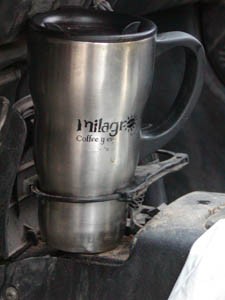

 Fenton R. Kay's Website & Blog Page Menu